|

“We will extend a hand if you
are willing to unclench your fist.” (President Barack
Obama in his inaugural address)
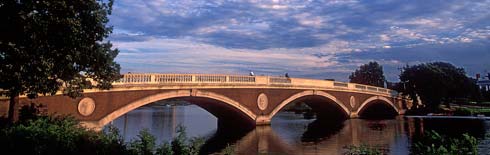
Zikman Collaborative Strategies deeply believes in dialogue as a bridge to greater understanding and resolution.
As neutrals, we focus on multi-stakeholder engagement, facilitation and mediation. Our key areas of practice include:
- Public Engagement and Deliberation.
- Consensus Building and Collaborative
Problem-Solving.
- Multi-Party Mediation and Conflict
Resolution.
We use consensus building
and other collaborative models to help address and resolve
a broad range of public policy issues while preserving critical relationships. We offer in-depth knowledge of group dynamics, multiparty negotiations, and intercultural interaction. Using mediation, facilitation, and a range of specialized tools we have developed for assessment, evaluation, process design, we help our clients integrate thought and action to achieve wiser, more stable, and fairer results. The core of our practice is centered on sustainable development and environmental matters, including:
- Land Use Planning & Zoning: historic
preservation, smart growth, community redevelopment projects,
etc.
- Natural Resources & Energy: coastal/marine
protection, endangered species, water planning, wind/energy
generation, facility and transmission siting, etc.
- Conservation and the Environment: hazardous waste and environmental cleanup, climate plans, land trusts and conservation easements, etc.
- Infrastructure: transportation planning, ports, public works projects, etc.
- Civic Engagement and Deliberative
Democracy: enhanced forms of public participation, etc.
Our other practice areas include: health care, emergency services, tourism and recreation, tribal rights, workplace relations, interagency relations, and negotiated rulemaking.


Our most recent projects
include:
- Metropolitan Transportation Authority’s
I-710 Corridor EIR/EIS Project encompassing 18 cities
in Los Angeles County adjacent to the freeway corridor.
- City of Los Angeles Department of Planning New Community Plan Process, development of best practices for more robust forms of public participation.
- The Cornfield/Arroyo Seco Specific
Plan (CASP), a collaborative LEED-ND Pilot Program project
with The Western Justice Center and the Los Angeles Planning
Department, engaging local stakeholders to define a mix
of uses, zoning parameters, and urban design features consistent
with the community’s vision in this rapidly evolving
area near downtown L.A.
- Stanford University’s San
Mateo County Housing Options Deliberative Poll, addressing
the development of housing alternatives as well as other
land use and environmental issues including transit-oriented
development, smart growth, open space, agricultural lands,
and local versus regional decision-making.
- The El Monte Community Building
Initiative, a 10-year plan by the Transportation and
Land Use Collaborative (TLUC) and the California Community
Foundation to revitalize El Monte by improving the city's
physical infrastructure and level of community engagement.
- California Strategic Plan on Reducing Mental Health Stigma and Discrimination, a public workshop hosted by the California Department of Mental Health to discuss and provide feedback on the vision, core principles, strategic directions, recommended actions and ‘how-to’ steps related to the Plan.
- Let’s Make a Change!,
a one-day workshop convened by Governor Arnold Schwarzenegger
to address how the State of California can become a model
employer for person with disabilities.

For more frequently
asked questions related to ‘Dialogue & Deliberation,
please click here.
|
 |